


Your heart is pounding. Your hands feel cold. Everyone is looking at you, and the words you practiced last night have vanished. If that sounds familiar, you're in good company. Fear of speaking in front of people is one of the most common fears there is, for adults too.
Here's the good news: speaking up is a skill, not a personality type. Nobody is born a great speaker. The girls who look calm at the front of the room have usually just practiced more. These public speaking tips for teens will help you get ready, handle the nerves and find your own voice, whether it's a class presentation, a club meeting or a scholarship interview.
Why speaking up matters so much
Public speaking isn't only for people who want to be on a stage. You use it when you give a book report, ask a teacher for help, try out for a team, interview for your first job or share an idea in a group project. Every time you speak up, people learn what you think, and you learn that your voice counts. That's why we see communication as one of the first leadership skills a girl can build. (Read more in 7 leadership skills every girl can start building now.)
Before you speak: get ready
1. Know your one main point
If your audience remembers only one sentence, what should it be? Write it down first. Everything else you say should help that one point. A talk with one clear idea is easier to give and easier to remember than a talk that tries to cover everything.
2. Use notes, not a script
Reading every word off a page makes you sound stiff, and if you lose your place it's hard to find it again. Instead, write 3 to 5 key words or short phrases on a card, one for each part of your talk. Glance down, then look up and talk like you're explaining it to a friend.
3. Practice out loud, three ways
Practicing in your head doesn't count. Say it out loud at least three times: once alone in your room, once in front of a mirror or your phone camera, and once in front of a real person, like a parent, sibling or friend. Each round, you'll notice a spot to fix and you'll feel a little calmer.
4. Plan your first and last lines
The start and the end are what people remember most, and the start is when nerves are strongest. Know your first sentence by heart so you can get going without thinking. Know your last sentence too, so you don't trail off with "so... yeah, that's it."
Handling the nerves
5. Call it excitement
Nervous and excited feel almost the same in your body: fast heartbeat, butterflies, extra energy. Instead of telling yourself to calm down, try telling yourself "I'm excited." That energy can make you sound more alive, not less.
6. Breathe slowly before you start
Take three slow breaths before you walk up. Breathe in for a count of four and out for a count of six. A longer breath out tells your body that you're safe, and it helps steady a shaky voice.
7. Find a friendly face
In every room there's at least one person nodding or smiling. Start by talking to them. Then find another friendly face on the other side of the room. Looking at a few people, one at a time, feels much less scary than trying to look at everyone at once.
While you speak: sound confident
8. Slow down and pause
Almost everyone talks too fast when they're nervous. Aim to speak a little slower than feels normal. Pausing after an important point gives people time to think, and it makes you look calm even if you don't feel it yet.
9. Stand tall and plant your feet
Stand with your feet about hip-width apart, shoulders back, and keep your hands relaxed at your sides or holding your note card. Try not to sway or hide behind your hair. Your body sends a message before you say a word.
10. Don't apologize for being there
Skip openers like "Sorry, this probably isn't very good" or "I'm really bad at this." They tell the audience to expect less. Swap them for a simple start: "Hi, I'm Maya, and today I want to tell you about..." Then go.
11. If you mess up, keep going
You lose your place. You say the wrong word. It happens to every speaker. Most of the time, the audience doesn't even notice. Pause, look at your note card, take a breath and pick up where you left off. Carrying on after a slip is one of the most important speaking skills there is. At Girls Rule we call it Complete Things, Don't Quit, and it's one of our 12 Leadership Principles.
After you speak: grow from it
When it's over, give yourself credit first. You did a hard thing. Then ask yourself two questions: What went well? What's one thing I'd try differently next time? Just one. Write it down so you remember it before your next talk. Over time, these small fixes add up to a big change.
Easy ways to practice speaking up
The more often you speak, the easier it gets. You don't have to wait for a big presentation. Try one of these this month:
- Ask or answer one question in class every day.
- Order for your family at a restaurant, or make a phone call you'd usually ask a parent to make.
- Give a short toast or say a few words at a family dinner or birthday.
- Volunteer to read out loud or share your group's answer in class.
- Join a club, team or youth group where you can take a turn leading a meeting.
- Record a one-minute video about something you love and watch it back.
A note for parents
You can help a lot by being her practice audience. Listen all the way through before you give feedback, and start with something she did well. Then offer one small tip, not five. Most of all, let her see that you're proud of her for trying, whatever happens on the day. If you want more ideas for building her confidence at home, read 10 simple ways to build confidence in your teenage daughter.
Practice your voice at the Girls Change the World Summit
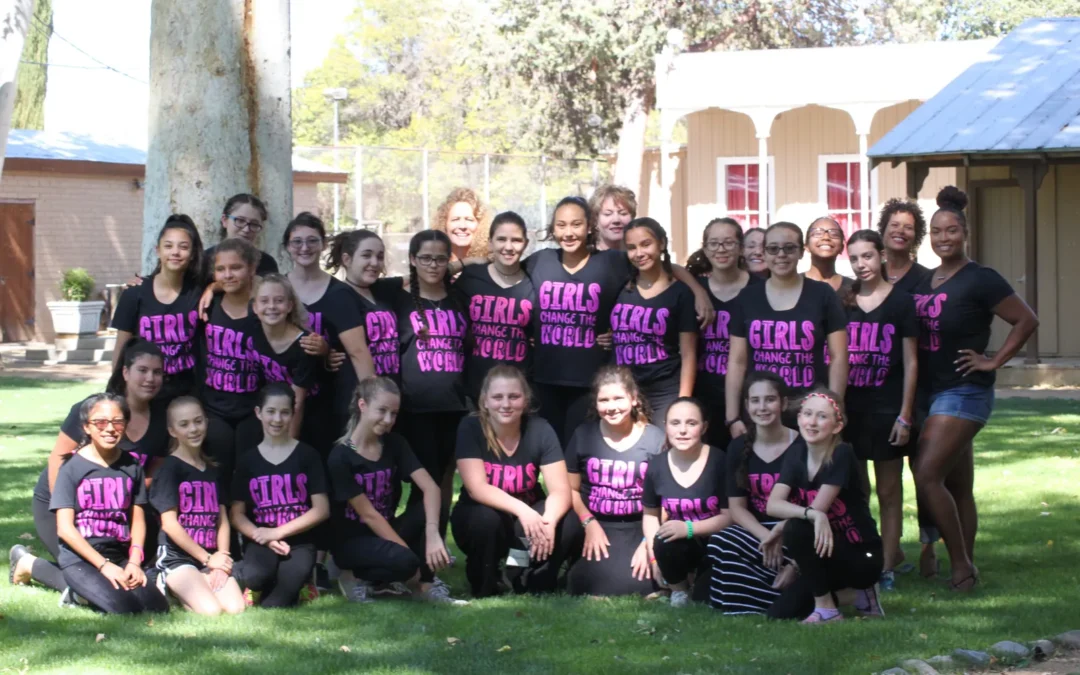
The Girls Change the World Summit is a high-energy day for teen girls in Tempe, Arizona, full of confidence and leadership workshops, inspiring female speakers and supportive mentors. At the most recent summit, girls also got a free professional headshot and a certificate for 6 hours of leadership training for their resume, and six girls each won a $1,500 Girls Change the World Scholarship. As Julia, age 15, put it: "I'm leaving with a lot of great tools and ideas that will help me and my goals." The 8th Annual Summit is planned for spring 2027, so join our email list to hear first when dates are announced.
Keep reading

Girl Empowerment Programs: What They Do and How to Choose the Right One
What girl empowerment programs really teach, 7 questions to ask before you sign up, and the Girls Rule options in Arizona and nationwide.

New Year’s Resolutions for Teen Girls: 12 Ideas From Our Leadership Principles
12 New Year’s resolution ideas for teen girls, one from each Girls Rule Leadership Principle, each with a small first step to take in January.

After-School Programs for Teen Girls: What to Look For (and How to Start One at Your School)
What to look for in an after-school program for teen girls, plus a simple 6-step guide for teachers and parents who want to start a girls’ leadership club.
Financial Literacy for Teen Girls: 5 Money Skills to Learn Before 18
Budgeting, saving, a first bank account, earning her own money and understanding debt: 5 money skills every teen girl should learn before 18, with easy ways to practice at home.